
Elysian Acoustic Labs is a Malaysian boutique that built its name on lavish, expensive flagships — the Annihilator, the DIVA — and the ~$399 Pilgrim is its first genuinely affordable set, still tuned by founder Lee Quan Min. One 9.2 mm liquid-silicone-rubber dynamic driver carries the lows; three Sonion balanced armatures take the rest through a 3-way crossover; manufacturing is handled by cable house Effect Audio, which also co-builds the pricier Pilgrim: Noir variant. It arrived billed, more or less, as ‘Elysian for the masses’ — which is precisely the kind of promise that makes nine careful listeners sharpen their pencils.
Those nine — professional critics, a measurement bench, forum owners, one dedicated contrarian — broadly love the Pilgrim’s talent and argue, sometimes sharply, about nearly everything else. Read one review and you get a verdict. Read all nine side by side, as this essay does, and the contradictions stop looking like noise and start looking like a pattern with a single cause. That pattern is the interesting part.
The object
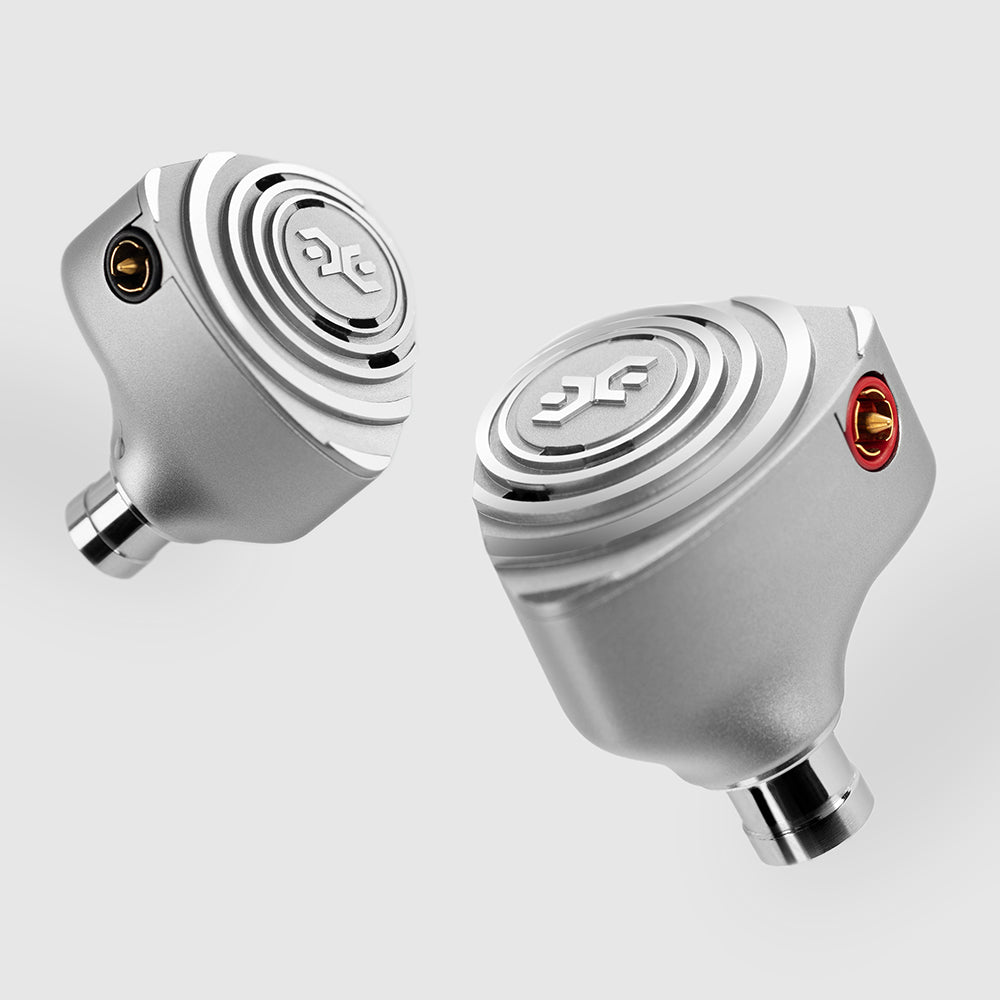
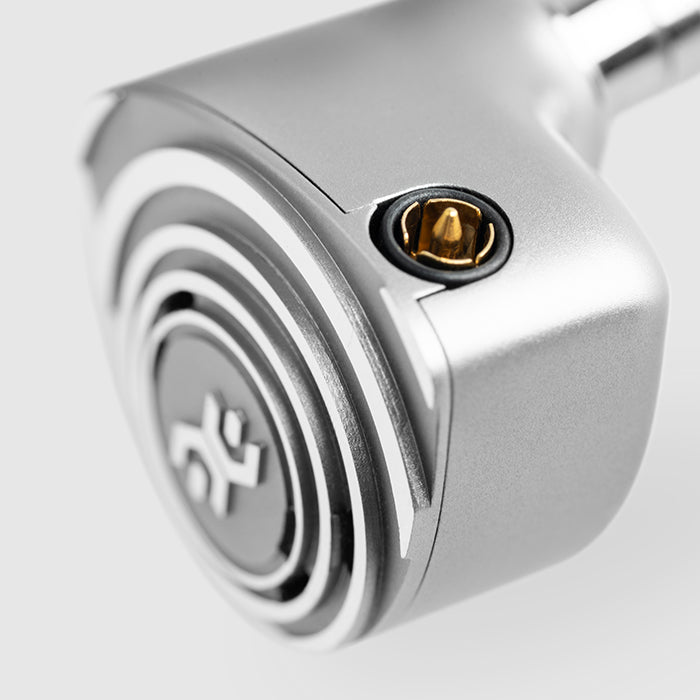
By every written account it is a handsome thing: compact CNC-aluminium shells around 8.7 grams a side, a bright silver faceplate, and a stock cable one owner rated “probably one of the best stock cables I’ve held”7 — “a handsome, exciting-looking earphone with a quality, price-appropriate build to back it up.”1 Two asterisks recur. The pretty faceplate is soft — the shells “tend to get scratched or have dents in them quite easily”8 — and the connector is a proprietary Pentaconn Ear socket, which quietly rules out most aftermarket cables. At 9 Ohms and 101 dB it runs happily off almost anything, though that low impedance makes it fussy about noisy or high-impedance sources.
Where nine people agree
Start with what nobody disputes. The low end’s calling card is sub-bass — deep, extended, textured, fast; even reviewers who find the overall bass modest single out the extension and rumble. The second unanimity is resolution: “Outstanding detail and clarity,”1 “a master of micro details,”8 “generally more detailed than the Hype 4 even in the mids.”7 Imaging draws the same chorus — “Channel-to-channel movement is crisp and precise”1 — and the Redditor who titled his review of the whole product “poetically flawed” still had to concede the point:
brimming with detail, accompanied by fabulous imaging
mournfulmonk, r/iems
The midrange is the other broadly loved region, with one asterisk hanging over it. Female vocals “stand out beautifully”3 on a forward upper-mid presence; but the lower mids run lean, so “male vocals sound a bit hollow in comparison,”8 and on the wrong recording that same energy can tip over — “some female vocals can sound honky.”2
The soundstage verdict is agreement wearing a caveat: wide across, shallow deep. “Wide, holographic and spacious with a good amount of air but lacks the spatial depth”8 is the median reading; “the stage depth is not that impressive”3 the blunter one; and the measurement bench, characteristically unmoved, files it as “a fairly average soundstage in width and depth.”2
Where they argue
Now the interesting part. Ask these nine what the Pilgrim is and you get labels that should not coexist: a “very neutral and mid-centric tuning,”8 “the Elysian w-shaped sound signature,”3 “a forward tuning, without becoming overly bright,”4 and a reading that it plays it “safer with tonality and thus misses out on the Elysian U-shaped house sound many adore.”2 The overreview logs four axes as genuinely contested — bass quantity, treble character, dynamics, and fit — and the naming confusion above could fairly count as a fifth.
The bass argument is the strangest, because both camps praise the same driver. The majority position: sub-bass superb, mid-bass lean — “kick drums in particular feel less dynamic and punchy”2 — not a set for bass lovers. The minority hears “a top-tier bass experience that could easily compete in a higher price bracket.”1 And one owner insists that seated deeply the Pilgrim is “anything but mid-bass lean,” while a shallow fit makes it “sound neutral and dry.”7 Hold that thought; it turns out to be the key to the whole dispute.
The treble split is sharper still — the two camps read like reviews of different products:
It handles complex tracks well enough and is not going to be fatiguing, but that also means the Pilgrim misses out on the sparkle and air in the treble
VSG, TechPowerUp
a strong brilliance region spike gives the Pilgrim plenty of air and shimmer but at the expense of listening fatigue
Thomas, Headfonics
Here is where reading everything at once earns its keep: both camps are describing the same graph. The Pilgrim pairs a real presence-region emphasis around 5–6 kHz with a comparatively polite, early-rolled top octave.2,5 Foreground the roll-off — narrower tips, a deeper seal, forgiving ears — and you hear smooth, safe, a little short on air. Foreground the presence peak (wide-bore tips are the repeat offender) and you hear glare and fatigue. Nobody is wrong; they are sampling different points of a fit-dependent curve.
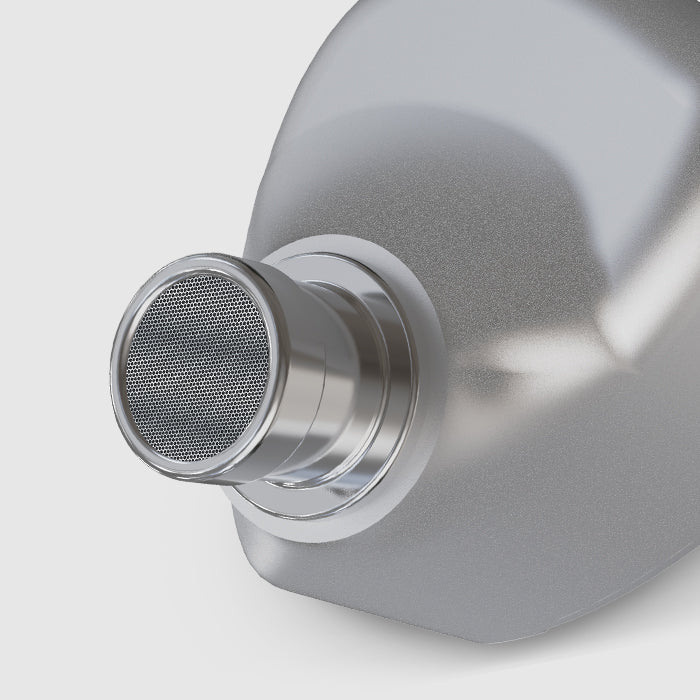
Dynamics runs the same script in miniature. Most find the macro punch “a little bit blunt”8 — the words “too safe” and even “boring” appear8 — while the deep-seal owner calls the dynamics “probably some of the best especially given its in ear form factor and price.”7 Even comfort refuses to settle: the shell is light and, for one, “strikes a good balance in size and comfort,”3 while another fought a hotspot where “the rear edge of the faceplate, which has a prominent edge, touched my ear.”1 The nozzle is wide at roughly 6 mm, the stock tips are sparse, and a stable seal takes work. Fit, you will notice, has now appeared in every single argument.
Three millimetres
It is the finding that belongs on the poster. Stacked on top of each other, nearly every disagreement about the Pilgrim — punchy or lean, lively or blunt, safe or sharp, comfortable or fiddly — tracks one variable: how deeply it sits in your ear, and through which tips. Deep insertion with narrower bores pushes it punchy, lively and treble-safe; a shallow seat with wide bores pulls it lean, dry and bright. The Pilgrim is less one IEM than a small family of them, and your ear canal decides which one you bought. No single reviewer can hear that from inside one pair of ears; it only becomes visible when the contradictions are laid side by side — the one reading a synthesis can do that a single audition cannot.
The price of the name
So is it worth $399? The room splits almost exactly in half, and the split is philosophical. Price the technical performance and it “performs at a very high technical level for this price point.”1 Price the tuning against a market dense with contenders and “the $400 price point makes it a tough justification”2 — several feel closer to $300 would be fair, and the harshest community verdict answers the question “buy at retail?” with a flat no.6 Owners — self-selected, as owners are — average 4.0 of 5 across 42 ratings.9
Where does that leave you? If you want a resolving, vocal-forward, sub-bass-anchored in-ear and are happy to tip-roll until it sits deep, the consensus says the Pilgrim rewards the fiddling. If you want thick mid-bass, an effortless fit, standard connectors or an unambiguous bargain, it says look elsewhere. And if you want the full map — every camp, every weight, every caveat — the overreview this essay grew out of is one click away.